Bedding care
How Duvet Covers Help Protect Silk-Filled Inserts
Silk-filled bedding can feel light, smooth, and quietly luxurious. Keeping it that way is less about frequent washing than about thoughtful protection. A removable duvet cover puts a practical, washable layer between a delicate insert and the ordinary wear of the night.
Published November 14, 2026
A duvet cover is easy to mistake for a finishing touch: the soft outer layer that gives a bed its color, texture, and finished look. But it does another job, too. It protects the insert inside from dust, skin oils, perspiration, spilled drinks, and the friction that comes with daily use.
That protection matters when the insert is filled with silk. Silk fibers are prized for their lightness and drape, but a silk-filled comforter may have care instructions that are far more restrictive than those for ordinary sheets. Some are spot-clean only; others call for professional laundering or careful airing rather than routine machine washing. A washable cover helps manage everyday soil before it reaches the insert, potentially reducing how often the insert needs more involved attention.
It is not a force field. Covers can shift, spills can seep through, and no fabric can replace good care. Still, the right one is among the simplest tools for maintaining a clean, comfortable bed without subjecting a delicate duvet insert to unnecessary handling.
The protective layer between sleep and the insert
Every night brings small encounters between bedding and the body. Skin sheds naturally; hair and body products may transfer to fabric; perspiration can collect in the bed’s warm microclimate. Dust settles during the day, and breakfast, tea, or a glass of water can turn a brief bedside pause into a stain. Most of this is unremarkable. Repeated over months, it adds up.
A duvet cover takes the first contact. Its outer surface can be removed and washed according to its care label, while the filled insert remains enclosed. That division of labor is useful: the cover receives the routine cleaning, and the insert is reserved for the method its materials and construction can safely tolerate.
Silk-filled inserts are not all made alike. Their shell fabric, fill construction, stitching, and finishing can differ, so there is no universal cleaning rule for every silk comforter. Some products recommend spot treatment only; others may permit specialized professional care. A cover does not make an insert machine washable. It simply helps limit the occasions when the insert itself becomes soiled.
The distinction is important. An insert may feel dry and look clean while the removable layer is ready for the laundry. Rather than relying on appearance alone, treat the cover as the part of the bedding system designed for regular washing. Consult the insert’s label or manufacturer’s instructions before attempting any direct cleaning.
Why silk deserves a gentler routine
Silk is a natural protein fiber with a smooth, lightweight character. In bedding, it can be used as fill, as a shell, or in both roles. A silk-filled comforter may also have a cotton cover, which makes it different from a comforter with silk on the outside. Those details affect how it feels and how it should be maintained.
Because construction and care requirements vary, the safest approach is not to infer washability from the word “silk.” Check the sewn-in care label and the product guidance. A comforter’s fill may be sensitive to moisture, agitation, high heat, or compression; its outer fabric may have different limits. When the instructions say spot clean or recommend professional care, follow that direction rather than assuming a duvet cover makes a home wash safe.
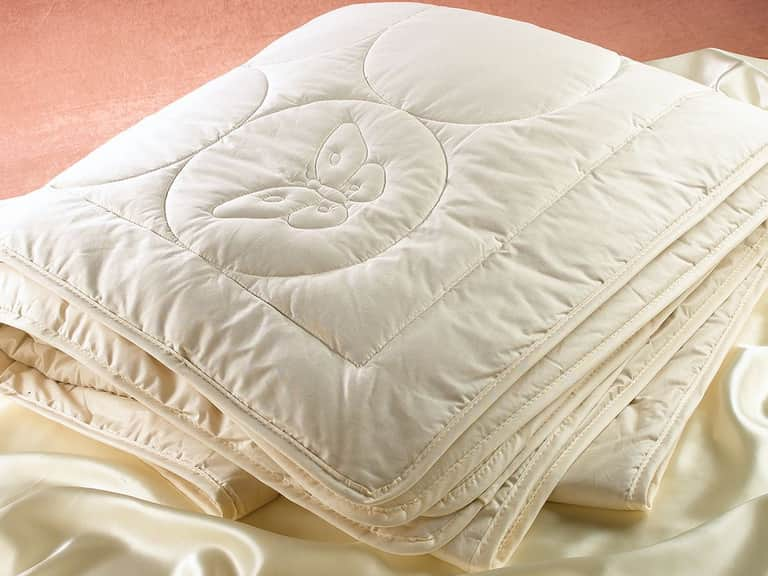
For example, the DownTown Company Natural Silk Year Round Comforter is described as having 100% natural silk fill and a cotton cover with an Aloe Vera finish. Its listed care recommendation is dry cleaning. That specific instruction is a reminder that a cover can reduce routine soil, but it does not override the care requirements of the insert.
Care labels are not fine print to be discovered after a spill. They are part of the bedding’s operating instructions. Before buying a silk-filled insert, it can be useful to consider not only its warmth and dimensions, but also whether its cleaning requirements suit the way the bed is used and maintained.
Choosing a duvet cover: four details that matter
A cover’s purpose is straightforward, but a poor fit or awkward fastening can make the whole arrangement frustrating. A thoughtful choice balances dimensions, fabric, closures, and laundry needs.
1. Match the cover to the insert’s dimensions
Start with the insert’s actual measurements, not just the size name on the package. “Queen” is not a guarantee that every queen cover has the same length and width. Compare both sets of dimensions and look for a cover intended for the insert’s size and shape.
A cover that is substantially too large can leave the fill bunched at one end or folded into an uneven mass. One that is too small may compress the insert, pull at the seams, or make it difficult to close. Some bedding is designed to pair with a particular cover system, so check the manufacturer’s sizing guidance where available.
2. Look for ties or loops
Internal ties in the cover can attach to loops or corner tabs on the insert. When the connection points line up, they help keep the insert from sliding into a corner or bunching during sleep. Some products use corner loops; others include ties along the sides as well. The arrangement varies, so compare the insert and cover before purchasing.
Ties are helpful, not magical. If they are left unsecured, or if the cover and insert have mismatched attachment points, shifting can still happen. A practical setup has fastening points that are easy to reach, easy to knot, and placed where the insert’s loops can meet them.
3. Choose a fabric you will want to use
The cover is the fabric closest to the sleeper, so feel matters. Cotton percale often has a crisp, breathable hand; cotton sateen tends to feel smoother and a little more fluid. Flannel offers a brushed, warmer surface. Linen has a relaxed texture and distinctive drape. Blends and other fibers bring their own qualities, and finishes can change the way a fabric feels.
There is no single best choice. Think about the bedroom’s temperature, the texture you prefer against the skin, and how much weight you want on the bed. A cover that feels comfortable and suits the season is more likely to stay in regular use—and a cover that is actually being used is protecting the insert.
4. Consider the fastening style
Duvet covers commonly close with buttons, snaps, or a zipper. Buttons are familiar and can be straightforward to replace, but they take time to fasten. A zipper can close quickly and contain the insert neatly, though it should be handled without pulling the fabric into its teeth. Snaps offer another option. Each design has trade-offs in feel, convenience, and repairability.
Check that the opening is large enough to make inserting and removing the comforter manageable. A closure that is secure but needlessly difficult can make washing less likely to happen on schedule. Simplicity is a form of good design when laundry day arrives.
A cover helps only if it is cared for
The protective layer needs its own routine. Follow the cover’s care label for water temperature, wash cycle, detergent, drying method, and any restrictions on ironing or bleaching. Instructions vary by fiber, weave, dye, and finish; one cover’s routine may not suit another’s.
Before washing, close zippers or fasteners if the label advises it, and turn the cover inside out if that is recommended. This can help reduce abrasion on closures and surface details. Use an appropriate cycle and avoid overloading the washer. A cover needs room to move through the water and rinse properly.
Dry it according to the label, and make sure it is fully dry before putting it back on the insert. Residual dampness trapped inside a closed cover can create an unpleasant environment and may affect the bedding. If the cover calls for line drying or low heat, do not substitute high heat for speed.
Washing frequency depends on use. A cover used nightly, directly against the sleeper, may need laundering more often than one used over a top sheet or in a guest room. Household circumstances matter, too: pets, allergies, spills, and warm weather can all change the routine. A sensible rule is to inspect the cover regularly and wash it when it is soiled, stale, or due under the household’s normal linen schedule.
Putting the cover on without stressing the insert
Making a duvet can be an awkward, arm-length task, especially with a large insert. A careful method reduces tugging and helps keep the fill distributed. Lay the cover flat, with its opening at the foot of the bed. Turn the cover inside out and place the insert on top, matching corners and any ties or loops.
Secure the ties before lifting or rolling the layers together. A common approach is to reach through the cover opening, grasp the far corners of both layers, and pull the cover over the insert. Then work along the sides, gently easing fabric into place instead of dragging the insert by one edge. Once enclosed, shake the comforter lightly and smooth the surface.
Avoid gripping delicate seams or pulling hard on a corner. The aim is to distribute the cover, not stretch the insert. If the comforter is heavy or difficult to manage alone, a second pair of hands can make the task easier. There is no benefit in wrestling a carefully made textile into shape at speed.
After the cover is on, check that the insert fills the corners and lies evenly. If one end keeps collapsing, verify that the ties are attached and the cover dimensions are appropriate. Persistent shifting may signal a mismatch rather than a problem with the insert itself.
What a duvet cover cannot do
Protection should not be confused with immunity. A cover can become stained, absorb moisture, or allow liquid to pass through. A zipper or button opening is also not necessarily sealed against dust or spills. If a spill occurs, remove the cover promptly and treat it according to its label. Check the insert for signs of moisture or staining, then follow the insert’s care instructions.
Do not assume that a stain on the cover means the insert is untouched. Liquid can travel through layers, especially if it is left to sit. At the same time, do not apply a stain remover directly to silk fill without guidance. Household remedies that are suitable for a washable cotton cover may be unsuitable for a delicate insert.
A duvet cover also does not eliminate the need to air the insert or inspect it from time to time. Follow the maker’s recommendations for refreshing, storage, and professional care. If the insert has an odor, persistent mark, damaged seam, or signs of dampness, a cover is not a substitute for addressing the underlying issue.
A simple care routine for a silk-filled insert
Maintaining silk bedding does not require an elaborate calendar. A modest routine, grounded in product instructions, can help keep both layers in good condition:
- Use a cover consistently. Make sure it fits and that its ties connect to the insert’s loops where provided.
- Inspect the cover regularly. Look for stains, loose closures, worn seams, and spots where the fabric has become thin.
- Wash the cover by its label. Use the specified cycle and drying method rather than applying a one-size-fits-all routine.
- Air the insert when appropriate. Follow the manufacturer’s instructions and avoid storing it while damp.
- Respond to spills promptly. Separate the cover from the insert and check both layers, while avoiding unapproved treatments on the silk.
- Keep the insert’s instructions available. Save the care label information or product guidance so the right method is easy to find when needed.
This kind of maintenance is deliberately unglamorous. Its value lies in preventing small, ordinary problems from becoming reasons for aggressive cleaning. With delicate bedding, the gentlest effective routine is often the most useful one.
The quiet value of the right fit
When a duvet cover fits well, its work is nearly invisible. The insert stays more evenly positioned. The outer fabric can be refreshed without repeatedly handling the fill. The bed can take on a new texture or seasonal weight without requiring a new comforter. All of this makes a duvet cover a functional part of bedding care, not merely a decorative accessory.
For a silk-filled insert, that distinction is especially useful. Silk can bring a supple, airy quality to bedding, but the exact cleaning requirements depend on the product. A removable cover offers a practical buffer against the nightly accumulation of dust, body oils, and minor spills, while allowing the insert’s more cautious care instructions to remain intact.
Choose by measurements first, then check attachment points, fabric feel, fastening style, and washability. Maintain the cover according to its label and treat the insert according to its own. The goal is not to make delicate bedding maintenance-free. It is to make good care easier—and to let the insert spend more of its life doing what it was made to do: providing a comfortable layer of warmth, night after night.
Quick checklist
- Compare the cover’s measurements with the insert’s actual dimensions.
- Check that internal ties and insert loops are compatible.
- Choose a fabric and fastening style that suit your comfort and laundry habits.
- Wash and dry the cover according to its own care label.
- Never treat the cover’s care instructions as permission to machine-wash the insert.