Bedding Care
How All-Season Wool Comforters Adjust to Changing Temperatures
An all-season wool comforter can make a bed feel ready for more than one kind of night. Some models adapt through separate layers that can be joined or used alone; others rely on a single, carefully chosen fill weight. Knowing how the construction works—and what care it requires—helps you make seasonal changes without guesswork.
Published October 28, 2026
Bedroom temperatures rarely hold still. A mild autumn evening can turn chilly before dawn; a well-insulated room may feel warm in winter, while a drafty one stays cool well into spring. Bedding has to respond to those shifts, and the comforter is often the layer doing the most work.
Wool is valued for warmth and moisture management, but “wool comforter” does not describe one universal design. A light, single-layer comforter behaves differently from a heavier one, and both differ from a dual-layer model whose sections can be fastened together or separated. The words all-season are useful only when you understand what they mean for a particular construction.
This guide explains how all-season wool comforters adjust to changing temperatures, what to inspect before choosing one, and how to care for it without risking the fill. A dual-weight wool comforter, such as the construction described for the All Natural Dual Weight Comforter, offers a practical example of a design intended to change with the season. Product care and configurations can vary, so the maker’s label and current instructions should always take precedence.
What “all-season” can mean
The label may refer to a comforter that is comfortable across a broad range of conditions, or to one that gives you a way to change its warmth. Those are related, but not identical, ideas. A single-fill comforter stays as it is: you can layer it with a blanket or duvet cover, but you cannot reduce its internal insulation. A modular design gives you more direct control if its components are genuinely separable.
In a dual-layer model, two sections may be designed to attach at the sides and corners with ties or other fasteners. Used together, they provide more insulation. Used separately, each section can serve as a lighter layer. The precise warmth depends on the fill amount, construction, room conditions and sleeper—not merely on the words “light” or “all-season” printed on a product page.
Other comforters use a single fill weight and breathable materials to cover a wider range of temperatures. That can be a simpler arrangement: there are no sections to connect or store. But there is also less flexibility. If the room changes dramatically between seasons, an additional blanket or a different comforter may be needed.
- Single-layer, all-season design: one fixed warmth level, with adjustment mainly through bedding layers around it.
- Dual-layer design: sections can be used separately or joined, if the construction and maker’s instructions allow it.
- Seasonal weight options: separate lightweight, medium or warm versions provide choice, but the comforter itself does not change.
How wool helps balance comfort
Wool fibers have a naturally crimped structure that can hold pockets of air. In bedding, those pockets contribute insulation while the fiber and fabric construction influence how heat and moisture move through the layer. The result is not a thermostat: a wool comforter cannot sense the room and change its fill. Rather, it can provide a useful balance of insulation and breathability, while the person using it adjusts the number of layers.
Wool can also absorb moisture vapor before it feels damp, although performance varies with the wool, the shell, the amount of fill and the conditions in the room. This is one reason some sleepers find wool comfortable across a range of temperatures. It does not mean every wool comforter will keep every sleeper cool or warm in the same way.
Construction matters as much as the fiber. Stitching, quilting and hand-tufting help keep filling in place. A well-secured fill is less likely to migrate into empty pockets, where warmth can become uneven. In a layered comforter, the attachment method matters too: secure ties or fasteners help the sections sit together, while accessible connections make it easier to separate them when the weather changes.
For a useful comparison, consider wool comforters with different fill weights. A lightweight design, such as the Healthy Choice Lightweight Organic Wool Comforter, is described as having 150 grams of wool per square meter. The Healthy Choice Medium Weight Organic Wool Comforter is described with 350 grams per square meter. These figures help distinguish the two models, but they do not by themselves predict a person’s comfort: room temperature, bedding layers and individual preference all count.
The case for separate wool comforter layers
A dual-weight arrangement is appealing because it makes seasonal changes a matter of configuration rather than replacement. When nights are mild, one section may be enough. When the room cools, the sections can be joined—provided the design is intended for that use. The advantage is straightforward: one bedding system can serve several conditions, and the unused layer can be stored until needed.
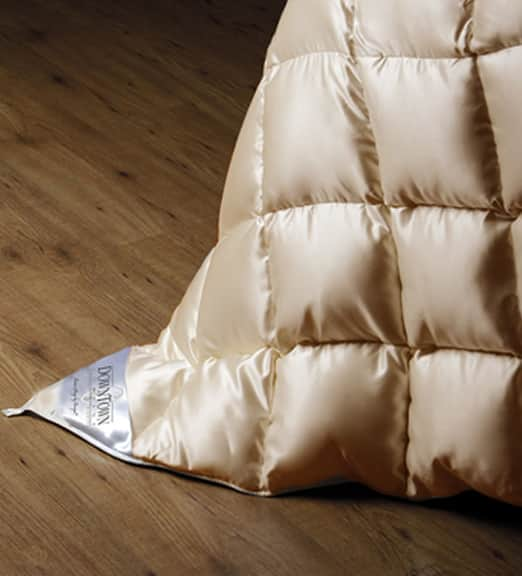
The All Natural Dual Weight Comforter is described as two comforters joined at the corners and sides with cotton ties. Its construction uses eco wool inside a GOTS-certified organic cotton sateen shell, with hand-tufting and perimeter stitching intended to keep the fill in place. Those details illustrate the features worth checking in any dual-layer wool comforter: connection points, shell fabric, fill stability and the care instructions for each component.
Separation is useful only if it is practical. Inspect whether the ties are easy to reach and fasten, whether the sections are intended to be used individually, and how the pieces should be stored when apart. Ask whether both layers have the same dimensions and whether they fit the duvet cover you plan to use. A clever system becomes inconvenient if the layers slide, bunch or require a cover that is difficult to manage.
There is also a trade-off. More components mean more handling, more storage decisions and more attachment points to inspect. If you prefer a simple bed with a single layer year-round, a one-piece comforter may make more sense. Flexibility is valuable when you will use it; it is not an advantage merely because it appears on a label.
What to examine before choosing
Shopping for an all-season wool comforter is easier when you separate the marketing language from the practical questions. Start with the construction and care instructions. Then consider your home: the room’s usual temperature, the way it is heated or cooled, and whether you already use blankets or a duvet cover.
1. Can the layers actually be separated?
Look for a clear description of how the layers connect and whether each can be used on its own. “Two layers” does not automatically mean the product is modular. Confirm that ties, buttons or another fastening system are designed to be opened and closed without damaging the shell.
2. What is the fill weight?
Fill weight, often expressed in grams per square meter, is a useful point of comparison when specifications are available. It is not a complete warmth rating. Comforter size, quilting, shell fabric, room conditions and personal preference also shape the result. When comparing products, match like with like and avoid drawing conclusions from fill weight alone.
3. How is the wool held in place?
Quilting, tufting and perimeter stitching can limit shifting. Look for a description of the construction and check whether seams appear evenly distributed. In a multi-layer model, the joining system should also help the pieces remain aligned during ordinary use.
4. What does the care label allow?
Wool care varies substantially. Some comforters are spot-clean only; others may be washed under specific conditions, and some manufacturers recommend professional laundering. Never assume that a washable wool fill makes the whole comforter machine washable. The shell, stitching and construction may have different limits.
5. Will it fit your existing cover?
Check the comforter’s dimensions against the duvet cover. A cover can protect the shell from everyday soil and make routine laundering easier, but it should fit without compressing the fill or leaving excessive loose fabric. Corner ties or loops can help secure the insert when the cover is designed to use them.
A simple seasonal setup
Seasonal bedding does not need to follow a strict calendar. Local weather and indoor conditions matter more than the name of a month. A change in how the bed feels—too warm, too cool or unevenly insulated—is often a better cue than a date on the wall.
Mild nights
Use the lighter component of a dual-layer system, if the maker says it is suitable on its own. With a one-piece comforter, try reducing extra blankets before deciding that the comforter is too warm.
Cooler evenings
Join the layers as intended, or add a separate blanket to a single-layer setup. Make one change at a time so you can tell which adjustment improves comfort.
Warm spells
Remove the heavier section or switch to a lighter covering. If the comforter is fixed-weight, a breathable sheet or lightweight coverlet may be more comfortable than keeping the full bed ensemble in place.
When storing an unused layer, make sure it is clean and completely dry. Follow any storage directions from the manufacturer, and choose a dry, well-ventilated space rather than sealing away damp bedding. Do not compress the comforter more than necessary for long periods; preserving its loft helps it remain comfortable and usable.
Comforter care: protect first, clean carefully
For most comforters, the least disruptive cleaning routine is the best one that keeps the item fresh. A duvet cover creates a washable barrier against skin oils, dust and everyday spills. Regular airing and gentle fluffing can help refresh the bedding without putting it through a full wash. Neither replaces laundering when the comforter is soiled, but both can reduce how often it is needed.
Wool comforters are particularly important to treat according to their specific instructions. One product may call for spot cleaning with a small amount of mild soap and air drying; another may permit a careful wash. The Healthy Choice lightweight and medium-weight wool comforters, for example, are described with spot-cleaning and air-drying instructions and a recommendation to use a comforter cover. Those directions should not be generalized to every wool product.
If spot cleaning is permitted, work gently and avoid saturating the fill. Use only the cleaner and method allowed by the care label, blot rather than scrub, and allow the area to dry completely before covering or storing the comforter. Excess moisture can be difficult to remove from dense filling, and rough treatment can affect the shell or move the wool.
If the comforter needs a full wash, first confirm that both the shell and fill are washable. Check machine capacity: a bulky comforter needs room to move through water without being forced into a small drum. Use the specified cycle, water temperature and detergent, and avoid bleach or fabric softener unless the maker explicitly permits them. Drying is equally important; follow the product’s directions and ensure the whole comforter is dry before putting it back on the bed.
- Read the sewn-in label and current manufacturer instructions before cleaning.
- Use a duvet cover when suitable, and wash the cover as often as its care label recommends.
- Address spills promptly with the approved spot-cleaning method.
- Air the comforter in a clean, dry place when appropriate; avoid leaving it damp.
- For a high-value or delicate comforter with uncertain instructions, contact the maker or a qualified laundering service before proceeding.
Common mistakes that shorten a comforter’s life
Assuming “all-season” means machine washable. Warmth and washability are separate properties. A comforter can adapt to several seasons yet require spot cleaning or professional care.
Washing too often. Frequent laundering can put unnecessary stress on fill, quilting and fabric. Clean when needed and use protective layers to limit everyday soil, while still following sensible hygiene practices.
Using heat without checking the label. High temperatures can damage natural fibers or cause shrinkage. Wool is particularly sensitive to unsuitable heat and agitation. Use only the drying method the manufacturer specifies.
Storing bedding before it is dry. A comforter that feels dry on the outside may retain moisture within. Allow sufficient drying time, especially after spot cleaning or laundering, before putting it away.
Expecting layers to self-adjust. Wool can help manage warmth and moisture, but it does not change its fill in response to the weather. The user still needs to remove, add or join layers as conditions shift.
Is a dual-weight wool comforter right for you?
A layered design is a strong option if your bedroom changes temperature through the year, you like having direct control over warmth, and you have room to store an unused section. It may also suit a household where one person prefers more insulation than another, provided the two sides or layers can be configured in a way the design allows.
A single-weight comforter may be the better choice if your bedroom stays fairly stable, you prefer fewer bedding components or you want a simpler care and storage routine. In that case, consider how the fill weight compares with your usual room conditions and how easily you can add a blanket during colder nights.
Neither format guarantees a perfect sleep temperature. Bedding is one part of the environment, alongside room temperature, sleepwear, sheets and personal preference. A sensible approach is to choose a construction that gives you useful options, then make gradual adjustments rather than trying to solve every comfort issue with the comforter alone.
A practical checklist
- Confirm whether “all-season” means one fixed fill weight or separable layers.
- Check how the layers attach and whether each is designed for individual use.
- Compare fill weight, dimensions, quilting and shell fabric—not just product names.
- Match the comforter size to your duvet cover and look for compatible corner ties or loops.
- Read care instructions before buying, especially if machine washing is important to you.
- Plan where a spare layer will be stored, and keep it dry and protected.
- Use seasonal changes in comfort as a cue to adjust the setup.
The lasting appeal of adaptable bedding
An all-season wool comforter is less a promise that one blanket will suit every night than an invitation to build a bedding system that can respond to changing conditions. Wool brings a distinctive combination of insulation and moisture management. Construction determines whether that performance comes in a fixed layer or a flexible set of sections. Care instructions determine how easily the comforter can remain in service.
For shoppers comparing wool comforter layers, the most useful details are often the least dramatic: how the pieces connect, what each weighs, how the fill is secured and what the maker says about washing. A dual-weight design such as the All Natural Dual Weight Comforter shows how separate sections can offer a seasonal setup, while lighter and medium-weight wool comforters provide fixed alternatives for different preferences.
Choose the system that fits your room, routines and willingness to manage extra layers. Protect it with a suitable cover, clean it only as directed and let the weather—not the marketing label—guide the final arrangement. That is how a comforter earns its place through more than one season.